
Enameled Cast Iron or a Baking Dish for Thanksgiving Sides?
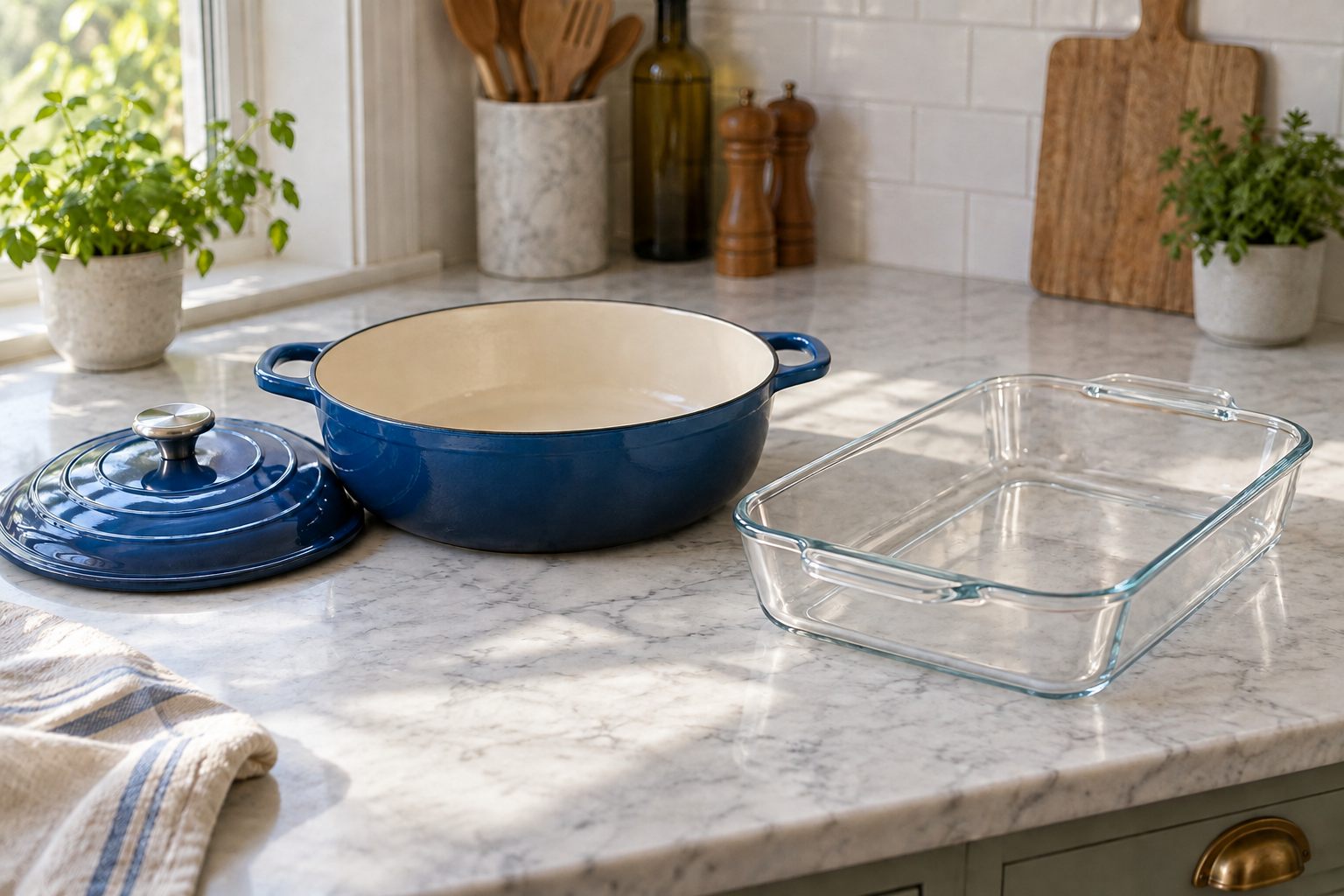
A covered enameled cast-iron braiser and a rectangular glass baking dish are different tools, even when both can bring a side dish to the table. Choose by the cooking route, recipe footprint and handling load before choosing a color or a general casserole label.
Some links below are paid links. We may earn a commission if you buy through them. As an Amazon Associate I earn from qualifying purchases.
Compare the useful differences
On a narrow screen, swipe the comparison horizontally to see every column.
| Requirement | Lodge 3.6-quart enamel braiser | OXO three-quart glass dish |
|---|---|---|
| Selected format | Round covered Oyster White braiser | 9 × 13-inch rectangular dish with storage lid |
| Material | Enameled cast iron | Borosilicate glass |
| Cooking route | Compatible stovetop then oven | Preheated oven within instructions; no stovetop/broiler |
| Manufacturer oven limit | Up to 500°F within product instructions | Care sheet up to 450°F; preheat first |
| Lid | Cookware lid; follow model instructions | Plastic lid never in oven or microwave |
| Recipe conversion | Capacity does not replace footprint | Capacity does not replace footprint |
Choose stovetop-to-oven only when needed
The selected Lodge 3.6-quart Oyster White braiser is enameled cast iron with a lid. The manufacturer supports stovetop use, including induction, and oven use within its limit. It is useful when the dish benefits from that cooking route. Heavy cookware and a lid are not a universal improvement for every baked side.
Keep the glass dish in its boundary
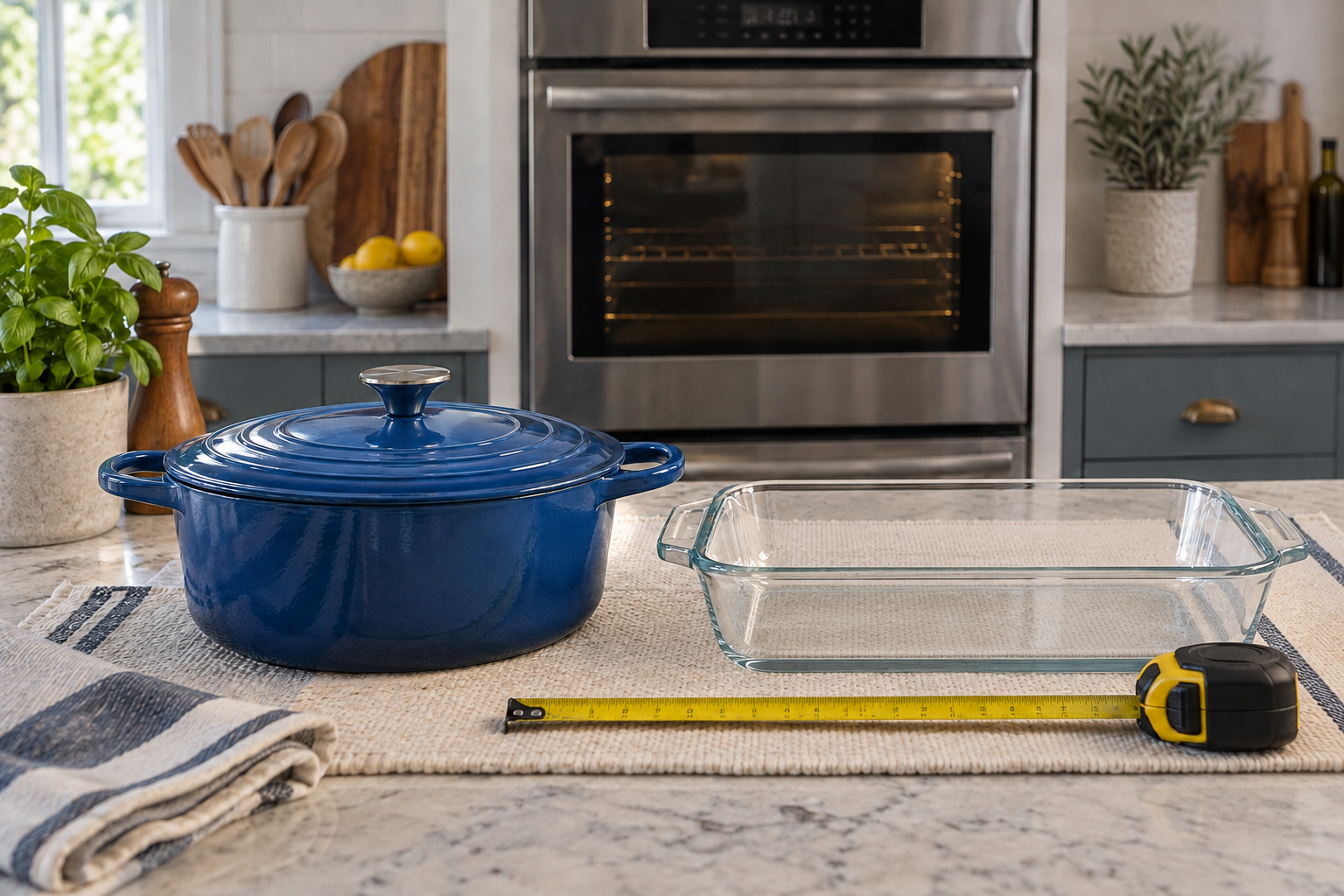
The selected OXO dish is three quarts with a nine-by-thirteen-inch footprint. Its care sheet prohibits direct flame, broiler, stovetop, grills and toaster ovens, and says never to use its plastic lid in an oven or microwave. Borosilicate glass is still breakable: inspect for damage and avoid sudden hot-to-cold contact.
Do not compare quarts as though geometry matches
A round 3.6-quart vessel and a rectangular three-quart dish distribute the same food differently. A source recipe specifying a particular footprint needs that footprint unless a conversion has been qualified. Capacity alone does not tell you topping area or filling depth.
Plan the lift and landing spot
Check handles, oven clearance and your ability to lift the filled vessel. Set hot glass on a dry suitable trivet, not a cold or wet surface. Use oven protection for cast iron handles too. The conflicting Lodge listing weight and manufacturer dimensions are excluded rather than silently treated as an exact match.
Keep care separate
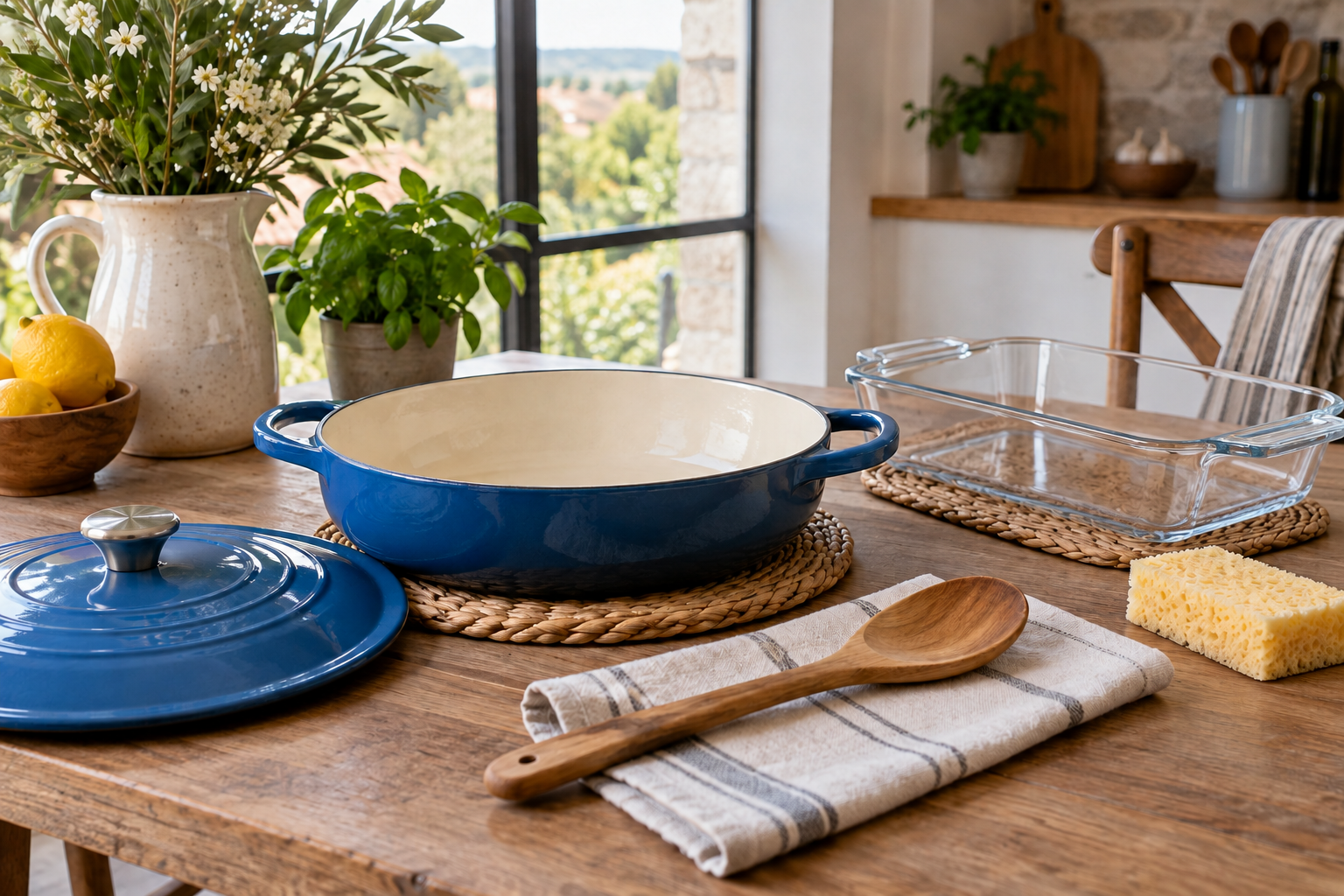
Lodge recommends gentle utensils and hand washing for this enamel cookware. OXO glass requires its own care routine. A plastic storage lid is not a baking cover. This is a cookware-format comparison, distinct from choosing glass versus plastic food-storage containers.
Which option fits your plan?
Check what you already own before buying. These are source- and specification-based selections, not hands-on product tests. Check the exact variant and current instructions before use.
Lodge Essential Enamel Braiser
The selected Lodge is the 3.6-quart Oyster White braiser, not a deeper Dutch oven or the Indigo variant. Use it when the cooking route and round format justify the added handling weight.
This is a paid Amazon product link.
OXO Glass Baking Dish with Lid
The OXO three-quart nine-by-thirteen-inch dish is the rectangular oven-only alternative. Keep the plastic lid out of heat and follow the official glass-care sheet even if a retail bullet sounds broader.
This is a paid Amazon product link.
For related planning, see Plan a separate roasted-vegetable tray. Follow that article for its own use case; it does not change this recipe or product’s instructions.