
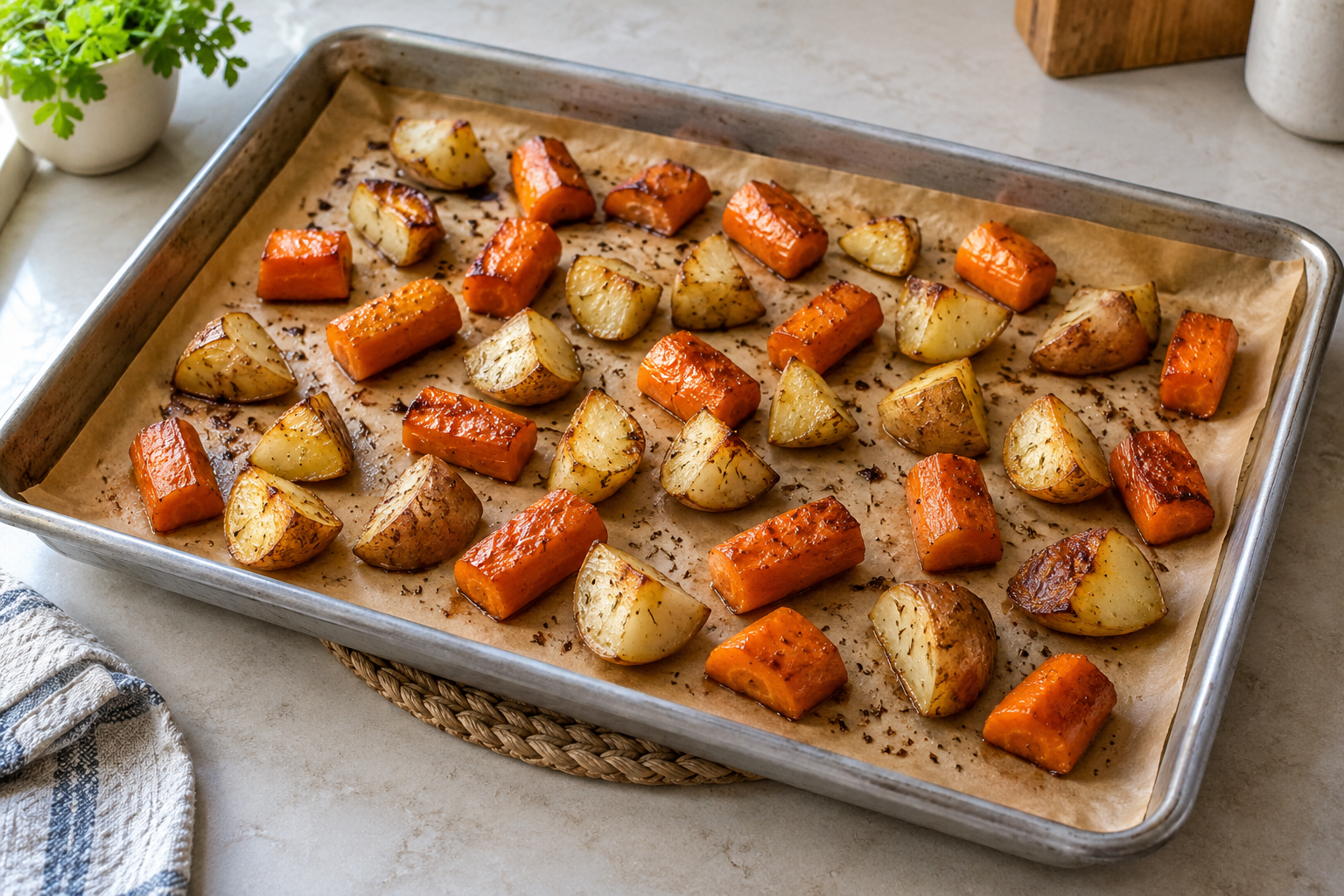
Want to know how to roast vegetables on parchment paper without ending up with a crowded tray of soft, pale pieces? Start with the vegetables and the space around them. Parchment is a pan liner, not a shortcut to browned edges. A roomy single layer and evenly cut pieces matter more than filling every inch of the sheet.
This practical guide draws on university extension cooking guidance and manufacturer parchment directions. Tha Munchiez has not independently tested this method or the linked sheets.
Give the vegetables room to roast
University of Maine Cooperative Extension warns that vegetables packed too closely steam rather than roast. Use a rimmed metal sheet pan and spread the pieces in one layer, with visible parchment between them. A layer can still be crowded even if nothing is stacked.
Before the pan goes into the oven, look for touching clusters. Move pieces apart. If opening gaps means pushing another section into a pile, divide the vegetables between pans or cook in batches. Let the available pan space decide how much goes in.
Cut for an even finish
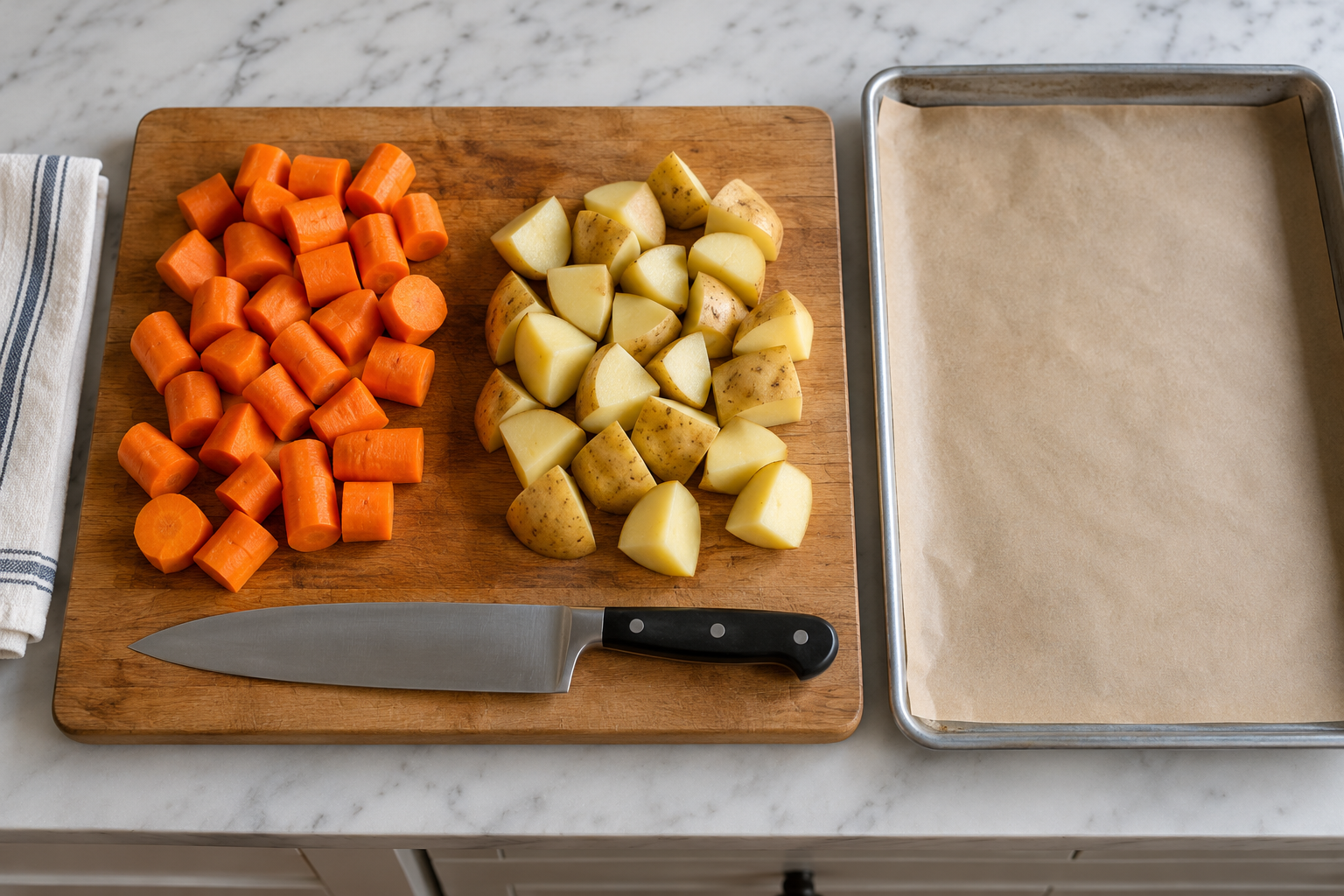
Wash the produce, then dry away surface water before oiling. Cut each kind of vegetable into pieces of similar thickness; a few tiny scraps among large chunks make the finish harder to judge. For root vegetables, Maine Extension uses roughly ¾-inch pieces and suggests splitting thick carrots lengthwise before chopping.
The illustration shows carrots and potatoes prepared separately so their sizes are easy to compare. Keep different vegetables in separate areas of the pan, or on separate pans, when you want to remove one kind before the other. Check each kind independently instead of assuming everything finishes together.
Check the parchment package before setting the oven
Choose parchment labeled for conventional-oven use and follow the temperature limit and restrictions on its own packaging. Trim the sheet to fit inside the rim. Do not let loose edges project beyond the pan.
Reynolds Kitchens rates its named parchment roll to 425°F, recommends preheating first, and prohibits contact with open flame or oven walls, broiling, and toaster-oven use. Those are that manufacturer's directions, not a universal rating for every sheet. Do not raise the heat beyond your liner's limit to chase darker edges.
The approved linked ASIN identifies LINSIRON 300-piece, 12 × 16-inch unbleached parchment baking sheets. The listing describes heat resistance to 450°F; verify the delivered package's rating and pan fit before using it. These are optional equipment to compare, with no promise that they will fix soggy vegetables.
As an Amazon Associate I earn from qualifying purchases.
Coat lightly, then spread again
Oregon State University's Food Hero recommends enough oil to give the vegetables a shine. Toss in a bowl to distribute it, then arrange the pieces on the lined pan. Aim for a light coating rather than a pool. Season as appropriate for your chosen vegetable recipe.
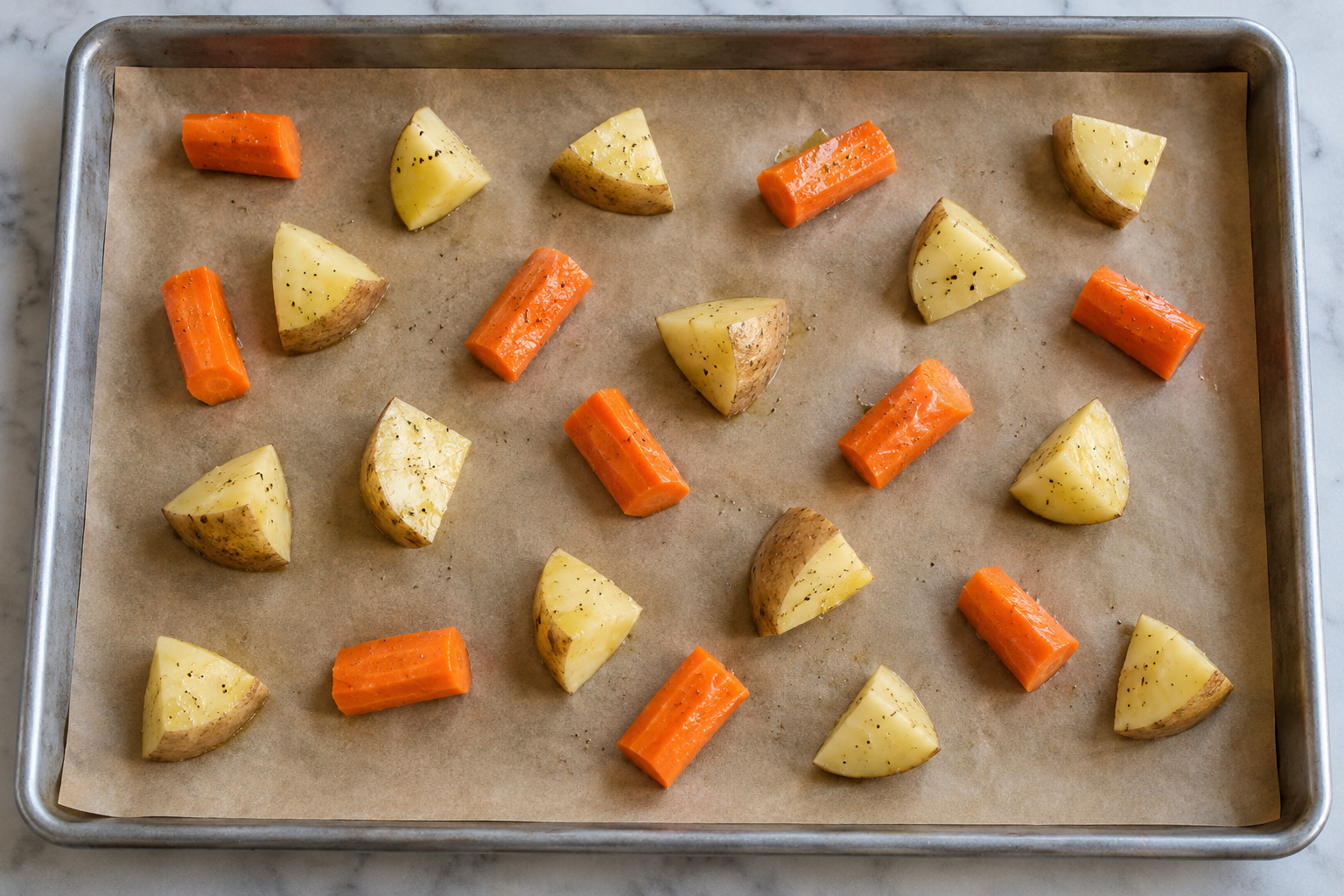
The spaced raw carrots and potatoes above illustrate the arrangement to check before roasting: exposed parchment around the pieces, no overlaps, and no mound in the middle. Parchment helps with cleanup, as Food Hero notes, but it cannot create space in an overfilled pan.
Turn and check the centers
Use a roasting recipe suited to the vegetables and cut size you chose, at a temperature your parchment permits. Maine Extension's root-vegetable guide starts at 400°F; Food Hero's general guide uses 425°F. Their instructions use different piece sizes and checking schedules, so avoid borrowing one source's cooking time for another cut.
Food Hero advises turning or stirring about halfway through roasting. Use a spatula to expose another side, then restore the gaps instead of leaving a pile. Look for lightly browned edges and a tender center; check a larger piece with a fork. Color alone does not tell you whether the middle is ready.
If the tray still looks soggy
- Pale, crowded pieces: Check spacing first. Transfer some to another prepared pan or reduce the next batch.
- Uneven doneness: Compare thicknesses. Remove finished pieces and continue checking the larger ones.
- Brown outside, firm inside: Keep checking tenderness within the liner's permitted temperature range; use more uniform cuts next time.
- Tender vegetables with modest browning: Adjust expectations. Reynolds describes parchment-roasted vegetables as softer; lining a pan does not guarantee a crisp crust.
For your next tray, make the final check simple: identifiable oven-rated parchment, reasonably uniform pieces, a light coating of oil, and enough room to see the liner. Then judge the finish by the vegetables in front of you.