
Affiliate disclosure: As an Amazon Associate, we earn from qualifying purchases through the product link below.
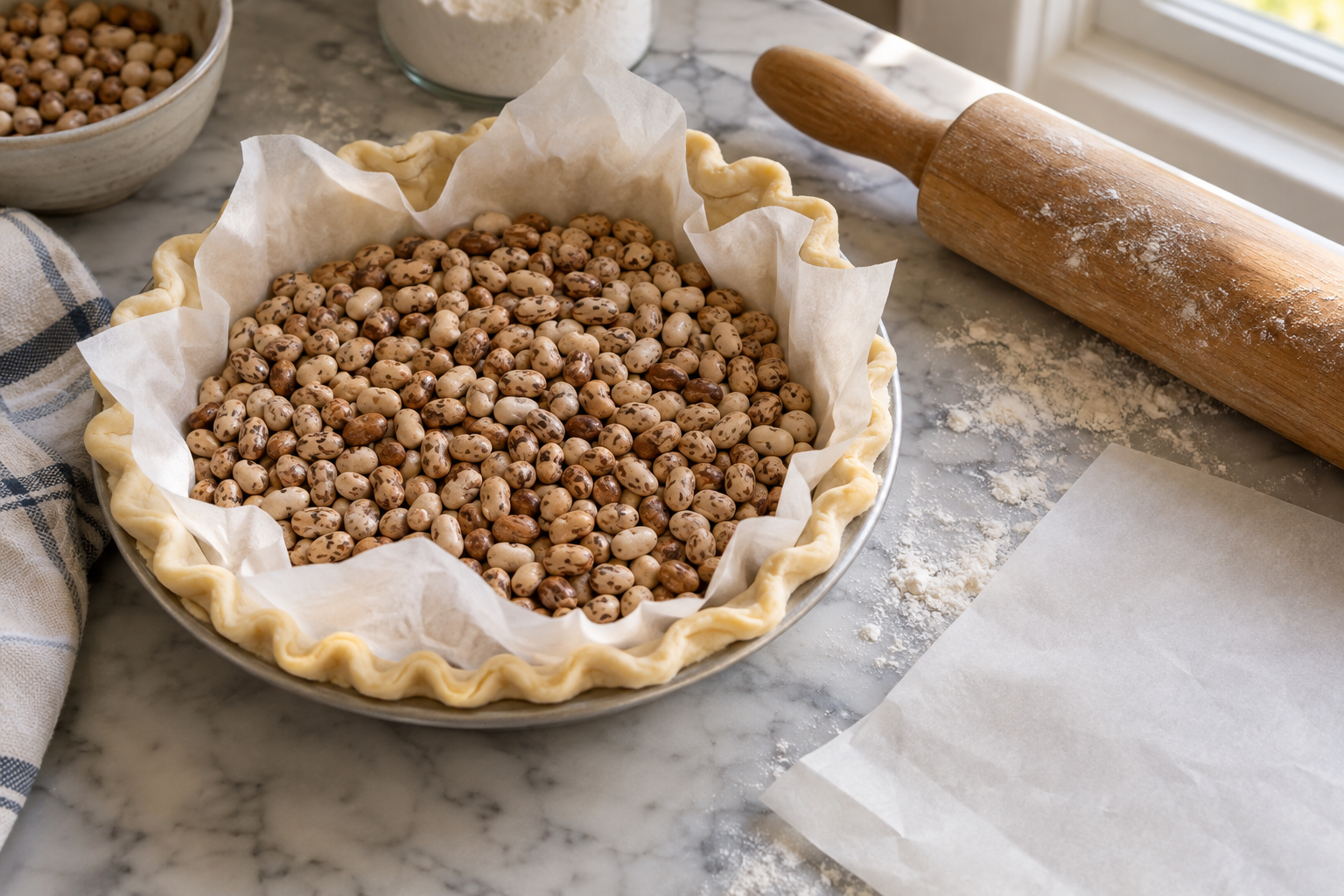
Blind baking means baking a pie shell before adding its filling. For a parchment-lined shell, the paper goes on top of the dough, inside the crust, and the weights go on the paper. The liner helps contain the weights when it is time to remove them. It does not replace the weights or guarantee that the crust will hold its shape.
Does your pie need a partial or full blind bake?
Start with the filling recipe. A no-bake filling generally needs a fully baked shell; a filling that will return to the oven may call for a partial bake. King Arthur Baking explains that distinction in its prebaking guide. Do not apply a cream-pie schedule automatically to every fruit pie or packaged crust.
Choose a sheet that fits the cavity
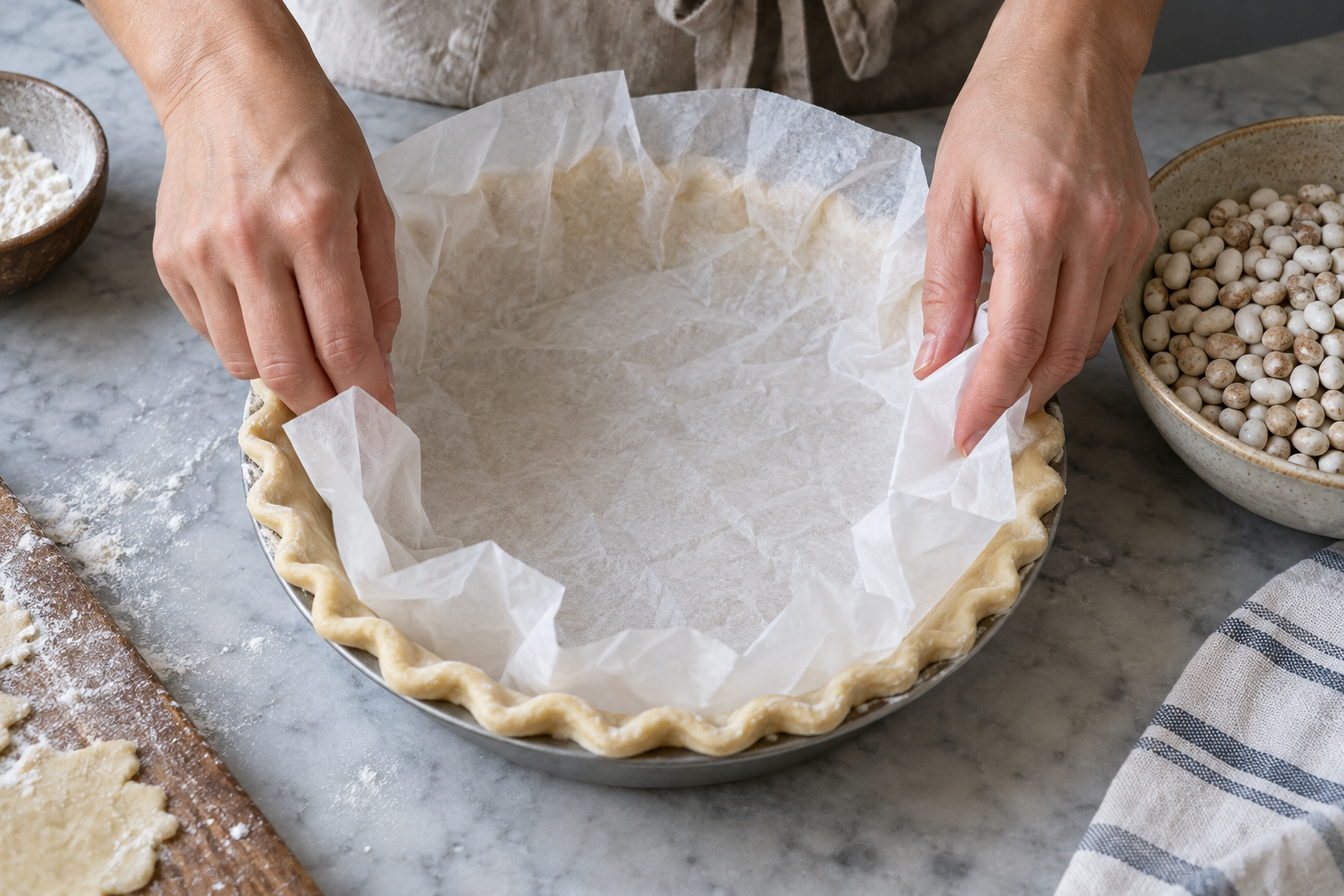
Dry-fit a sheet in the shaped, chilled shell. It should cover the base and sidewalls and leave enough accessible paper to gather after baking. Gently crumple and reopen the sheet if its folds resist the curve; avoid forcing sharp corners into the dough. Trim excessive loose paper while retaining a usable lifting margin. A small circle that covers only the bottom is a different fit from a sheet that also contains weights up the sides.
The catalog lists LINSIRON 300 Pcs Parchment Paper Sheets for Baking, 12x16 Inch, ASIN B0GYPGRQB3. The rectangular format makes it a candidate for cutting a liner, but check your pan's depth and the package directions before using it. A nominal sheet size does not establish oven compatibility, load strength, or a universal pan fit. We have not tested this product, and the verified catalog does not provide its maximum oven temperature.
View the LINSIRON 12x16-inch parchment sheets on Amazon and check the current package directions
Support the sides, then plan the removal
Use oven-suitable pie weights or the dry beans or rice specified by your baking method. Spread them across the lined cavity rather than leaving an isolated mound in the middle. King Arthur's October 2025 prebaking trial emphasizes support for both the bottom and sides. It also reports that moving loose weights in parchment can be awkward. That is a handling tradeoff, not a reason to promise effortless removal.
Before baking, put a heat-safe receiving bowl nearby and clear a landing place for the pan. After the weighted bake, set the pan securely on a heat-safe surface and protect your hands with oven mitts. Gather the accessible paper evenly and transfer the weights carefully. If the liner tears or the load feels unstable, stop lifting and remove weights gradually with a suitable heat-safe utensil. Keep hot weights away from children.
A practical technique checklist
- Prepare one pastry shell using a recipe or package with blind-baking directions. Shape and chill as instructed.
- Check that the liner is rated for the specified oven temperature and appliance. Fit it inside the shell without leaving paper near an element.
- Add the specified weights, supporting the sidewalls as well as the base.
- Bake at the crust recipe's temperature and time. Remove the liner and weights at its stated stage.
- Finish baking only as that recipe requires. Cool before adding a filling that calls for a cooled shell.
This is a liner-fitting guide, not a new pastry recipe. For a reproducible starting method, King Arthur's linked prebaking guide specifies a 30-minute chill and a 375°F weighted bake for 20 minutes, followed by a further 20 to 25 minutes for a fully baked shell. Use those figures with its method and suitable materials; they are not a tested LINSIRON product instruction.
Paper and heat: check the actual package
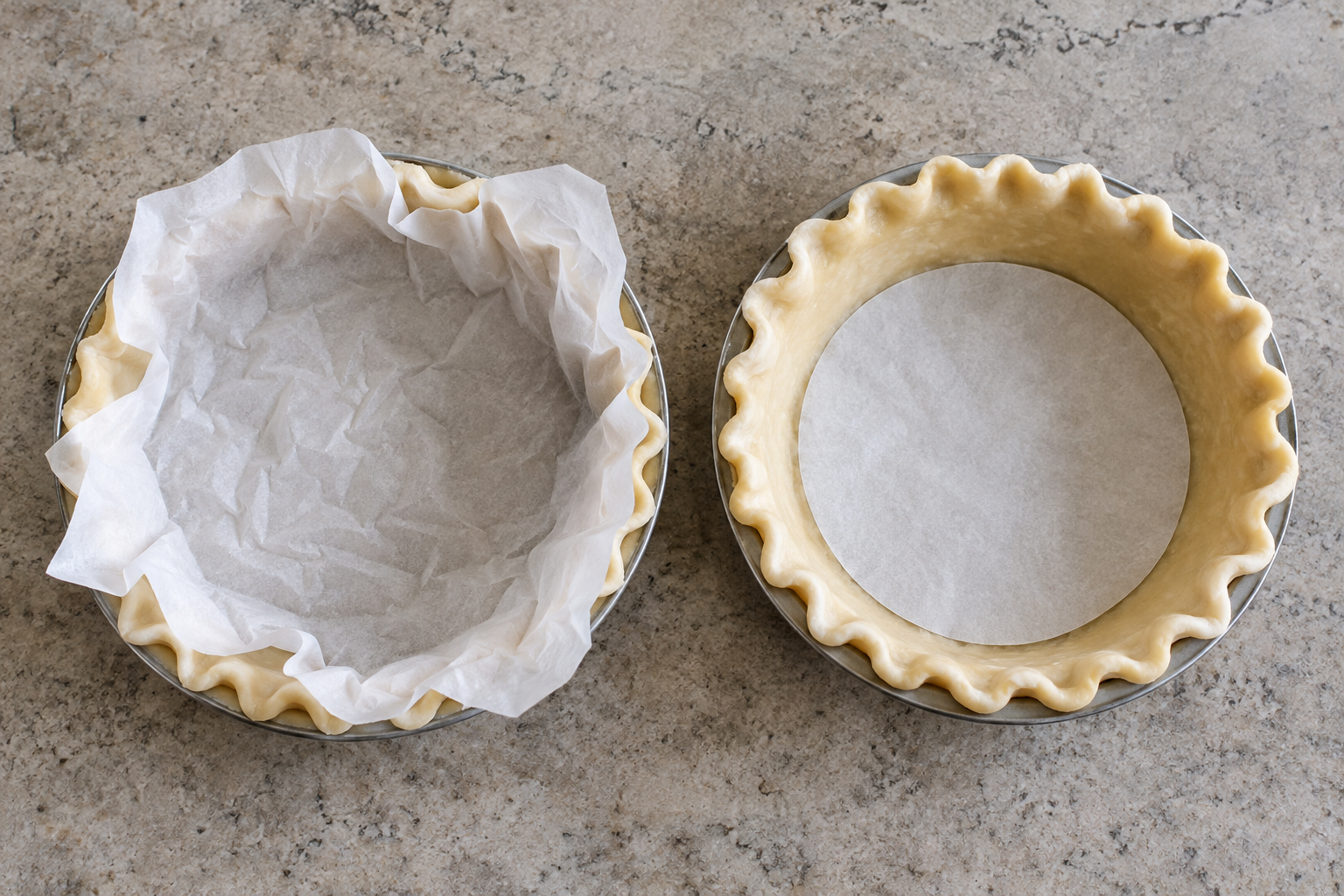
Read the rating on the paper you actually have. For example, Reynolds' parchment-roll directions state a 425°F limit and prohibit broiler and toaster-oven use. Those are instructions for that Reynolds product, not specifications for the linked LINSIRON sheets. Do not transfer a competing brand's rating to an unverified package.
Quick troubleshooting
- Paper too small: replace it before baking; a liner should contain the planned weight load.
- Slumping sides: revisit chilling, dough handling, and weight coverage in the crust recipe. More parchment alone is not the remedy.
- Pale base after removing weights: check whether the recipe calls for a second bake. A partial shell and a finished shell have different endpoints.
- Paper damaged during removal: discard it rather than treating reuse as an assumed product feature.