
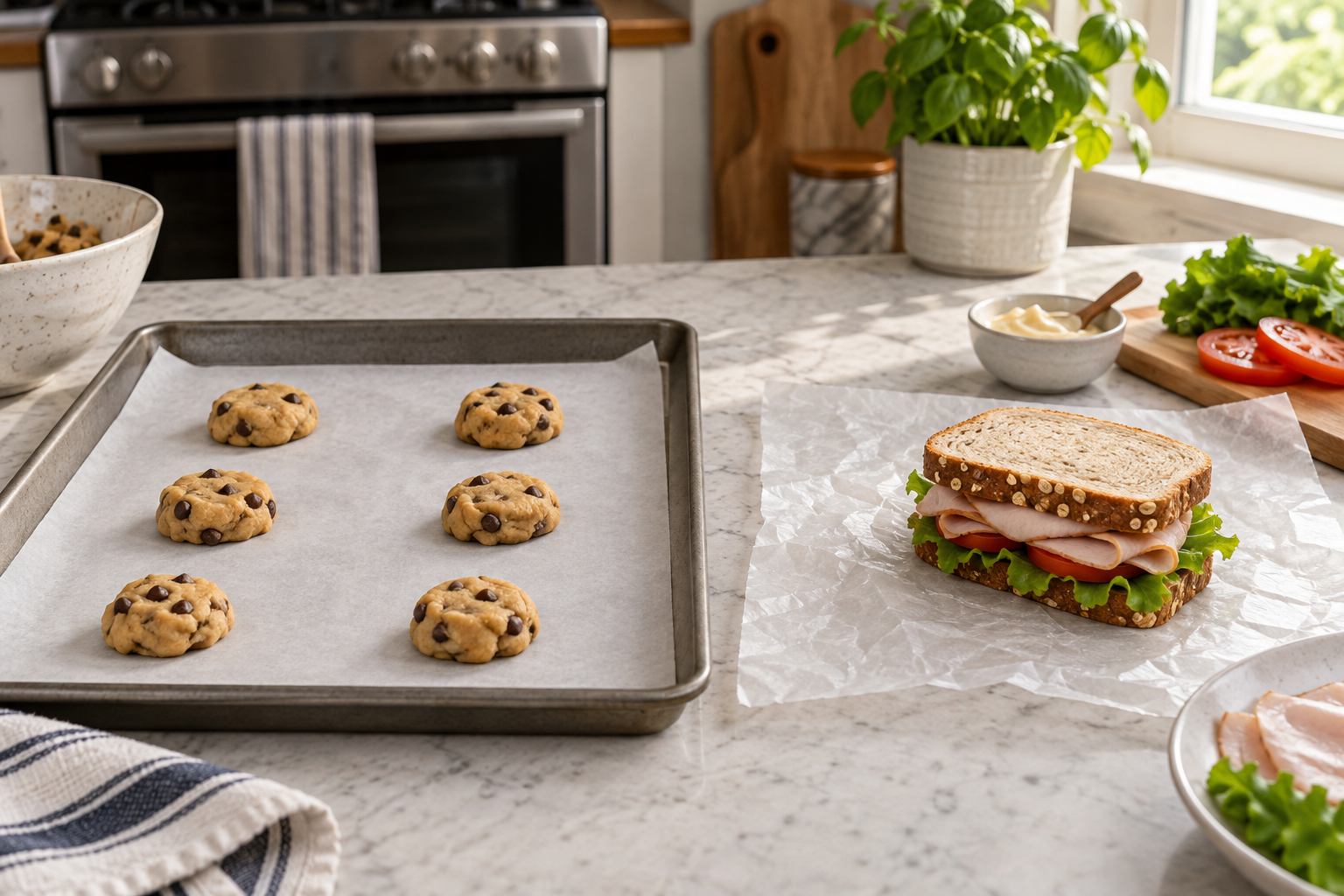
If you are lining a cookie sheet or roasting pan, reach for parchment paper labeled for oven use. Do not swap in wax paper: its wax coating is not meant to face direct oven heat and can melt. For rolling dough, catching decorating drips, or wrapping a sandwich, wax paper may be the sheet you already need. Reynolds Kitchens explains the distinction.
The quick kitchen decision
- Baking cookies or roasting on a lined sheet: Choose oven-rated parchment and stay within the temperature printed on its package.
- Rolling dough or protecting the counter while decorating: Wax paper works for prep; parchment can work too. Remove a wax-paper prep sheet before baking.
- Wrapping a sandwich or separating cooled treats: Wax paper is useful away from direct heat.
- Covering a dish in the microwave: Check the paper package and microwave manual. Reynolds labels both its Cut-Rite wax paper and parchment roll microwave-safe; a microwave is not the same as a conventional oven.
- Broiling or using a toaster oven: Do not assume either paper is suitable. Reynolds specifically rules out its parchment roll for those uses.
Why they are different
Reynolds describes its Cut-Rite wax paper as lightweight paper coated with food-grade wax. Its parchment roll has a nonstick surface and is labeled oven-safe in a conventional oven up to 425°F. That 425°F number belongs to the named Reynolds product; check the limit on the particular roll or sheet you own.
The sheets can look alike in a drawer. Color or feel is a poor substitute for the carton label. If the sheet is loose and you cannot identify it, do not guess that it is oven-safe.
In the oven, use parchment within its limits
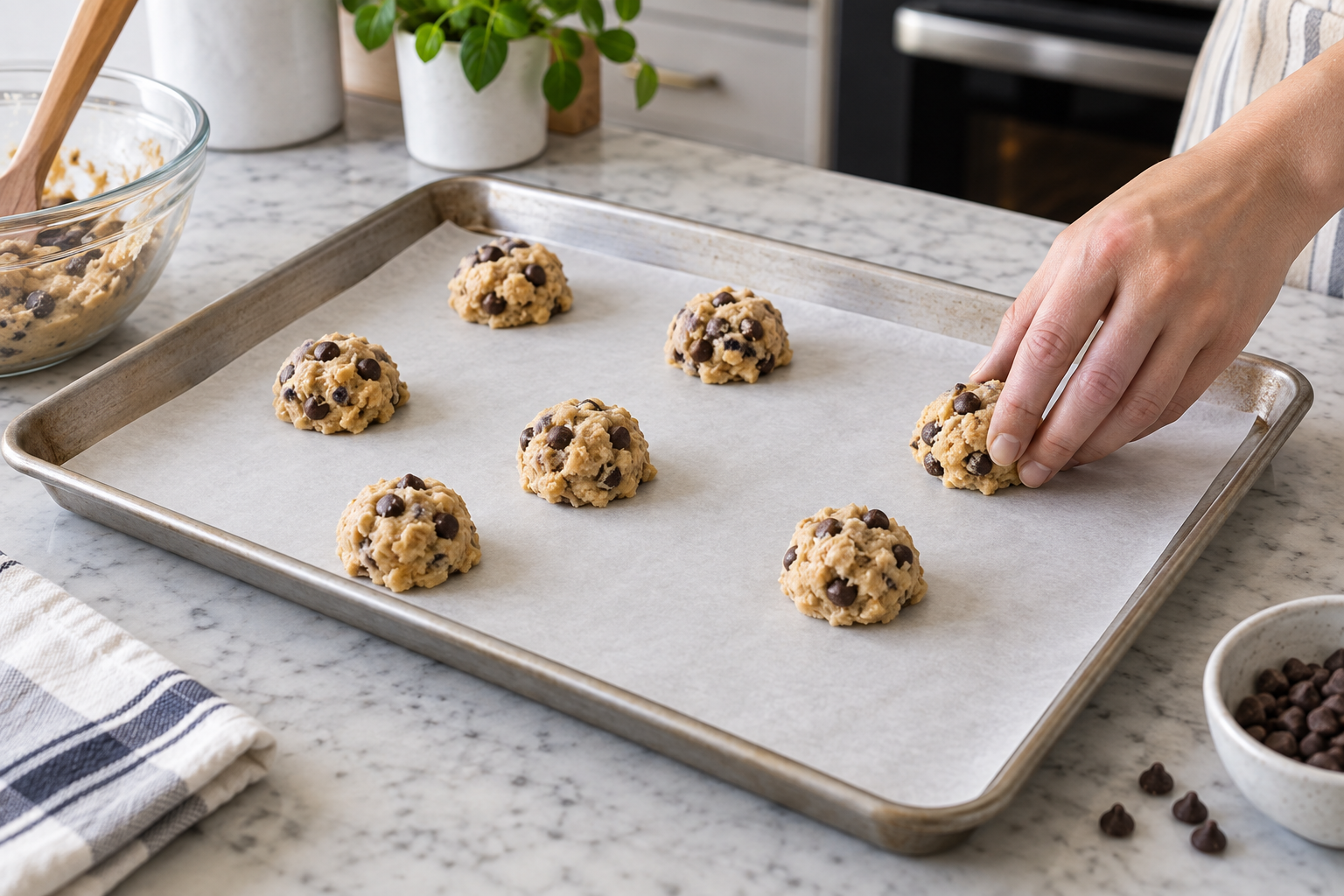
For a conventional-oven baking sheet, cut oven-rated parchment to fit the pan. Reynolds advises keeping its parchment away from open flame and the oven walls, and says not to use it under a broiler or in a toaster oven. If a recipe calls for a temperature above your paper's stated limit, use a different pan preparation that the recipe and cookware instructions allow. See the maker's oven directions.
This article contains a paid link. As an Amazon Associate I earn from qualifying purchases.
LINSIRON parchment baking sheets is an option to compare. Check the exact package's oven rating before use.
View on AmazonPaid linkThis is also why “parchment is heat-resistant” is not enough on its own. The product rating, oven mode, and where the paper sits all matter.
Keep wax paper out of ordinary oven use
Do not use wax paper as an exposed liner for cookies, roasted food, or any baking sheet where oven heat reaches the paper. It is not a general replacement for parchment. Reynolds says its wax paper should not be directly exposed to oven heat.
There is one narrow manufacturer-specific qualification: Reynolds allows its Cut-Rite wax paper beneath dough or batter that completely covers the liner, such as in some cakes or breads. That does not make wax paper a general oven liner or establish the same permission for another brand. The simple default when choosing a sheet for oven baking is still parchment labeled for that use, not wax paper.
Give wax paper a job it is made for
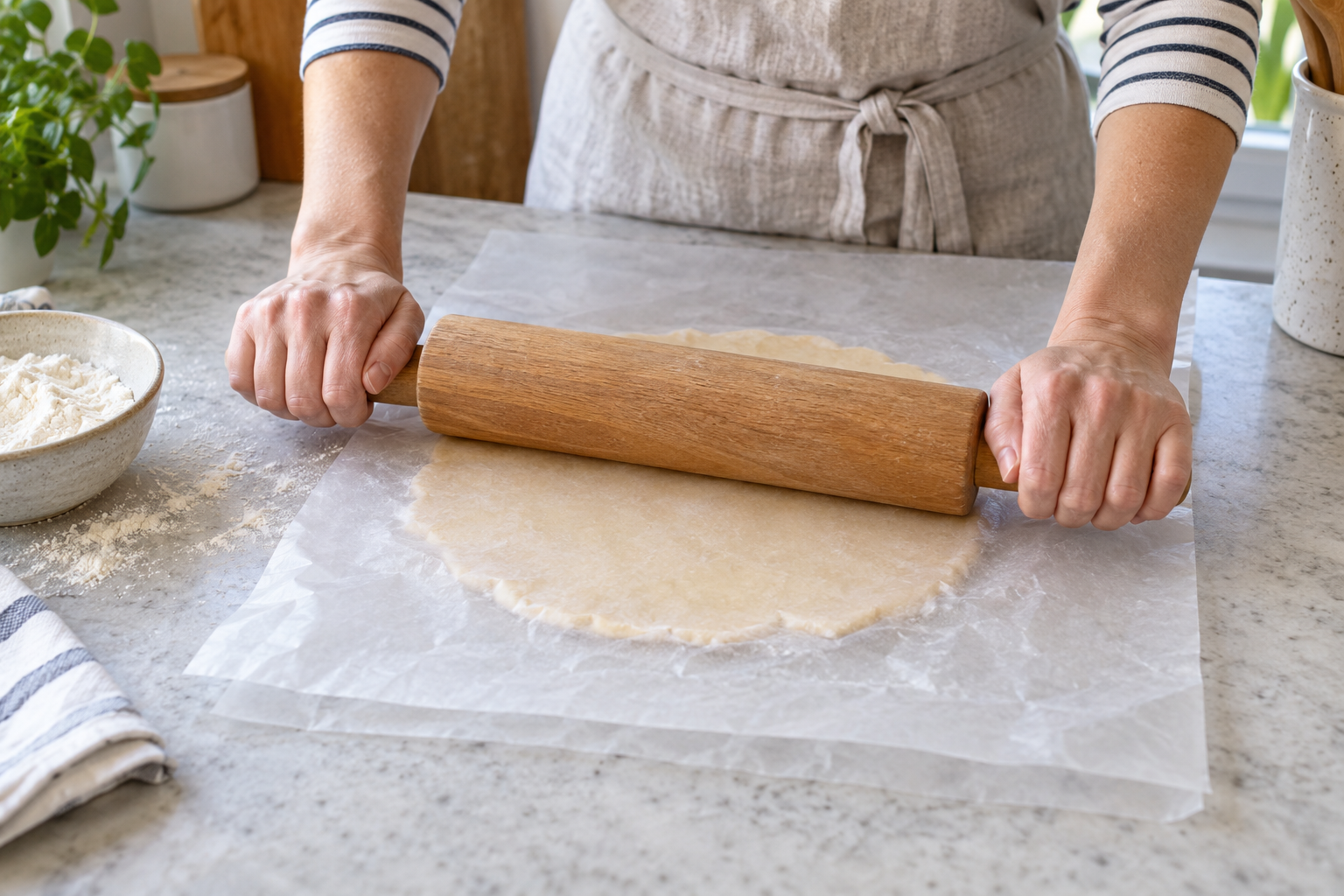
Use wax paper on the counter to roll dough between sheets or catch frosting drips; the Cut-Rite product directions describe both uses. Reynolds also suggests it for wrapping sandwiches and separating or storing cooled foods. A sheet can be a convenient barrier, but it is not an airtight storage container.
For an air fryer, make a separate decision from the appliance manual and the exact liner directions. An oven rating alone does not establish air-fryer suitability. Reynolds warns that a loose parchment liner can lift into the heating element and says to follow the air-fryer maker's instructions. Read its liner guidance.
When you are midway through a recipe and only wax paper is in the drawer, pause before lining the hot pan. Check the recipe's permitted pan preparation or get paper that is clearly rated for the oven task.